 Homebly
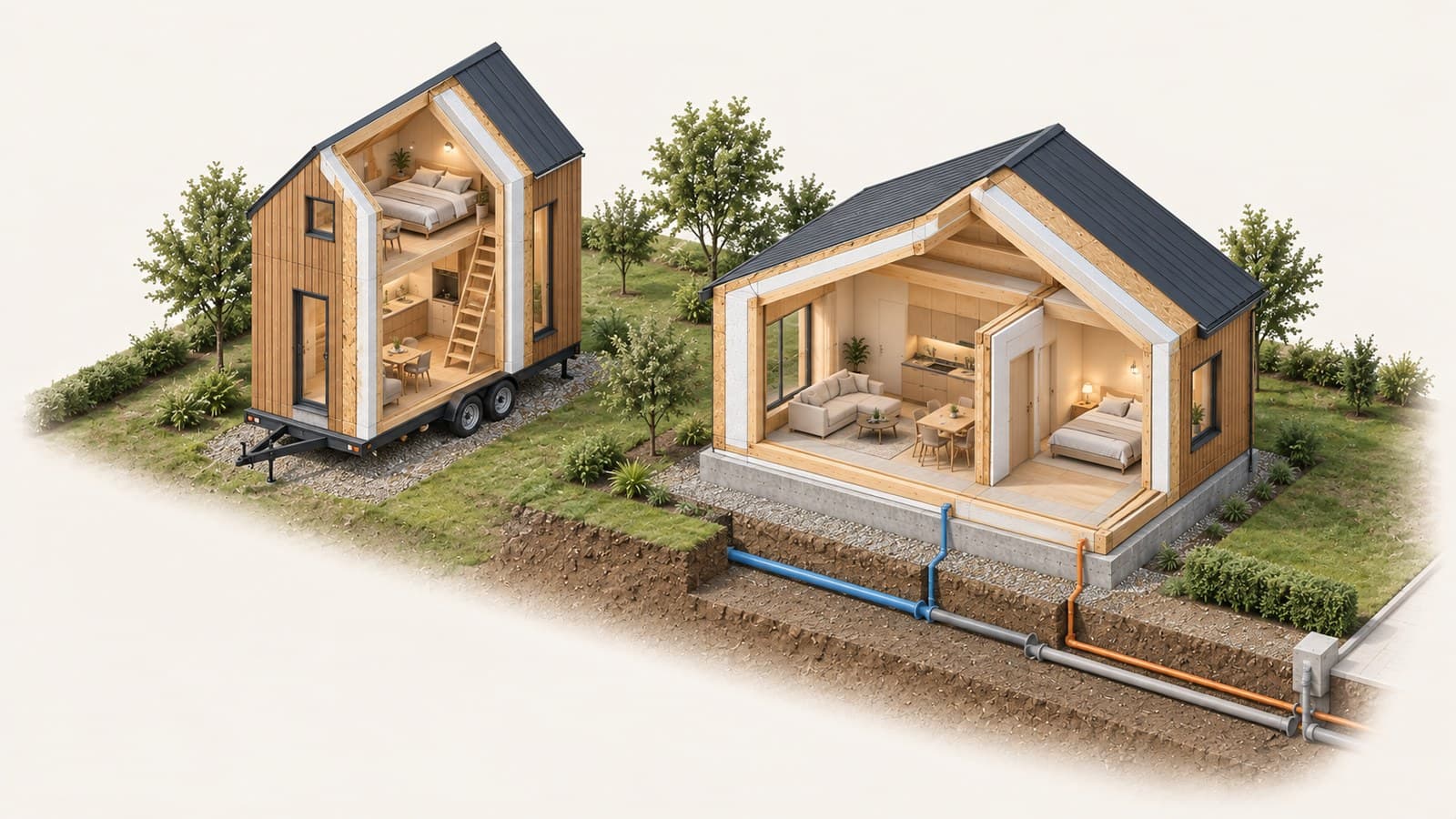
Tiny house in Romania: on wheels or on a foundation, and what 40 m² gets you
What a tiny house means in Romania in practice, what the wheels impose (road width, a sleeping loft, the paperwork) and what you get when the same idea stands on a foundation: 39.6 m² with a separate bedroom.
Published: September 29, 20264 min read
The short answer: "tiny house" covers two different things. One is the house on wheels, usually under 25 m² of floor, built on a trailer. The other is the small house on a foundation, around 40–50 m². The difference is not style: the first is a vehicle, the second a building, and the paperwork, how you get through winter, what the bank says and how much room you actually live in all follow from that.
We should say up front what we build: only the second kind. The smallest house in our catalogue is 39.6 m² on a single level. We do not make houses on wheels. We say so, so you know where we stand.
There is no "tiny house" in Romanian law
Romanian law does not define tiny houses separately: it has vehicles and buildings, and the line between them is not always clear. On wheels, registered as a trailer and not fixed to the ground, a tiny house is formally a vehicle. On a foundation it is a building, however small, and goes through the town hall: a building permit or, for some rural houses, a notification.
Between the two lies a grey zone. A house on wheels connected to utilities and set on blocks can be reclassified as a building, and town halls do not all read this the same way. Where the line runs, and where the 15 m² myth comes from, is in our article on what you can build without a permit.
What the wheels impose
A house on wheels has to fit on the road. The maximum width of a vehicle on EU public roads is about 2.5 m, so the inside stays narrow and every centimetre of wall comes out of the room. Wall thickness is traded against interior space.
Height is limited by the road too, so the bedroom usually ends up in a loft under the roof, reached by a ladder, where you cannot stand up. For a few nights that is fine. For everyday life, the ladder and the low ceiling become part of every evening.
Mobility is more a possibility than a habit. A fitted-out house on wheels weighs several tonnes, and every move means a suitable towing vehicle, a road trip and a new place where you are allowed to stay.
Catalogue: 19 projects with prices (PDF)
All barnhouse and A-frame projects with shell and turnkey prices — free, straight to your inbox.
We’ll reply on WhatsApp at this number. By submitting this form, you agree to our privacy policy.
What 40 m² on a foundation gets you
On a foundation, the same idea looks like this in our catalogue: the 749-1 barnhouse has 39.6 m² on one level, with a 26.2 m² open-plan kitchen and living room, a 4.5 m² bathroom and an 8.9 m² bedroom. That bedroom is a room with a door, on the same level as the rest of the house: no loft, no ladder. The 749-2 variant has the same plan with a different facade.
Beyond the floor area, it is what you can do with it. The wall is the SIP panel with the insulation inside it, and its thickness does not come out of the room width; the house connects to utilities like any other. Why there is no monthly heating figure, and what decides it, is in our guide to heating a SIP house.
If you want the cabin shape, the 715-1 A-frame has 45.8 m² on one level: a 38.5 m² studio under the tall roof, no stairs. Prices for these houses, shell and turnkey, are in our article on the 50 m² house.
On wheels or on a foundation, point by point
| What matters | On wheels | On a foundation |
|---|---|---|
| Status | A vehicle, registered as a trailer | A building: a permit or, for some rural houses, a notification |
| Where it stands | Where the town hall accepts it, and readings differ from place to place | On a plot where local rules allow a dwelling |
| Sleeping | Usually in a loft, up a ladder | In the 749-1: a bedroom on the same level, with a door |
| Walls | Their thickness comes out of the room width | Thickness is set in the design, not taken from the room |
| Utilities | Tanks, or connections that can change its status | Connections like any house |
| Paperwork | Movable property, not in the land register | Property entered in the land register, which a bank and a buyer can value |
In short, in the order the differences show up:
The last row shows up latest and costs the most. The logic is the same as for containers, set out in our comparison of a SIP house and a container home.
When wheels are the right choice
We are not writing against houses on wheels. One makes sense if the land is not yours, if you know you will move in a few years, or if you want to try living in a small space before you build. In all three cases, ask the local town hall before you bring it, not after.
If you want to stay on your own land, live there in winter and be able to sell the house one day, the foundation answers the questions above. Tell us where the plot is and what you want to do with it: we will answer honestly, including when the first step is a question to the town hall.
Can I legally live in a tiny house in Romania?
It depends on its status. On wheels, registered as a trailer and not fixed to the ground, it is a vehicle, and what the town hall accepts for it staying on a plot varies from one locality to another. On a foundation it is a building, however small, and goes through the town hall: a building permit or, for some rural houses, a notification.
What is the smallest house you build?
The 749-1 and 749-2 barnhouses, 39.6 m² on a single level, with an open-plan kitchen and living room, a bedroom and a bathroom. In the cabin shape, the 715-1 A-frame has 45.8 m², also on one level. We do not make houses on wheels.
Related articles
Published: September 2, 2026
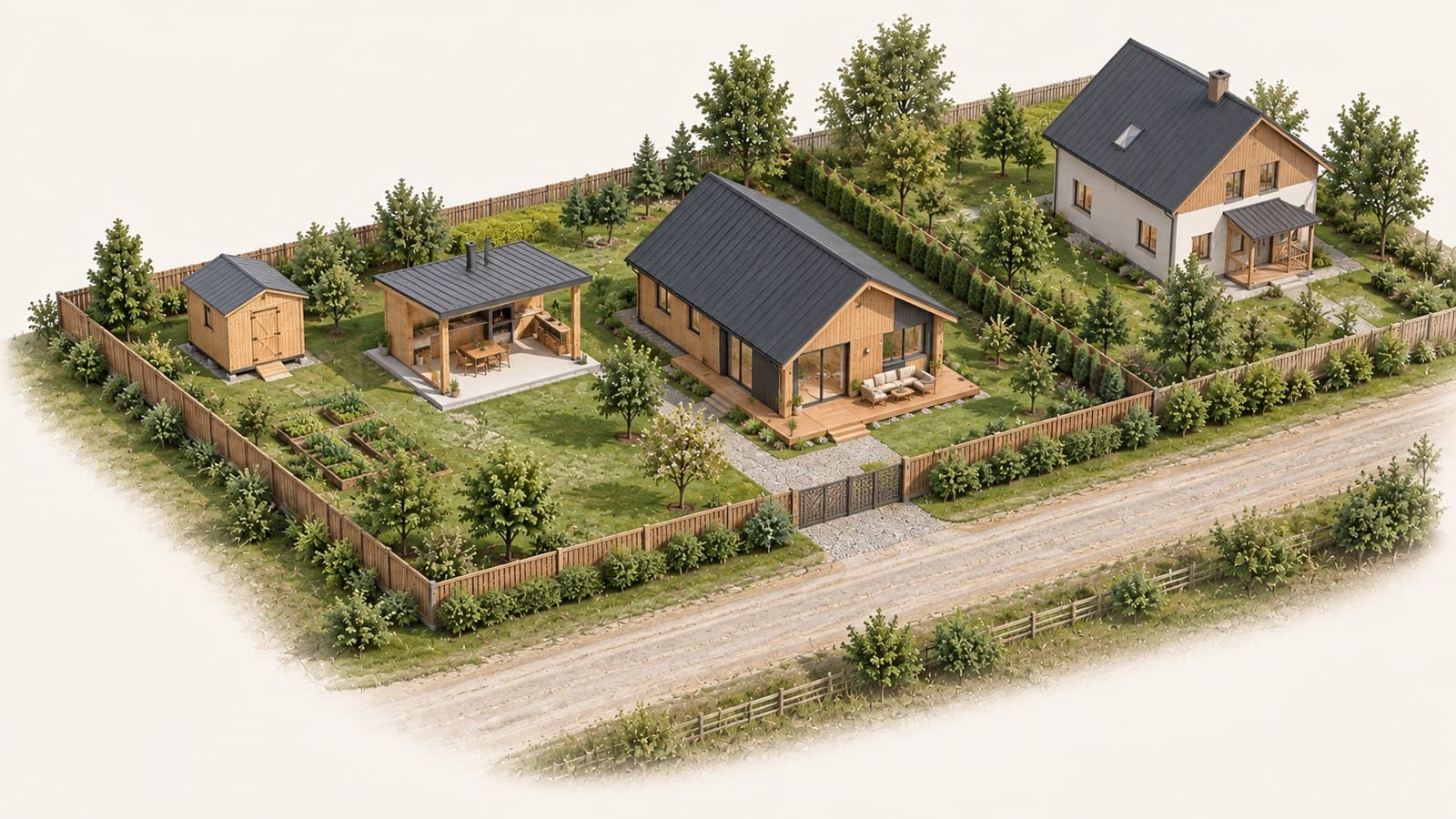
What you can build without a permit in Romania in 2026, and where the 15 m² myth comes from
Published: September 8, 2026
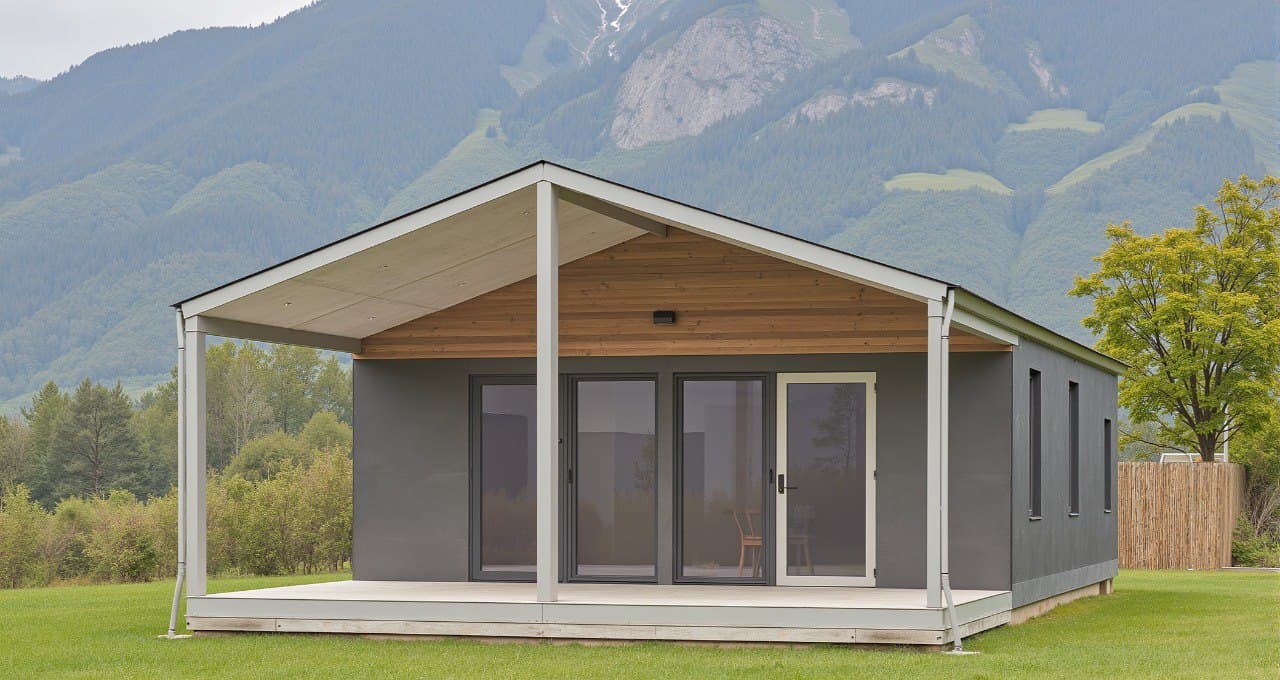
How much does a 50 m² turnkey house cost in 2026: a breakdown on real designs
Published: September 23, 2026
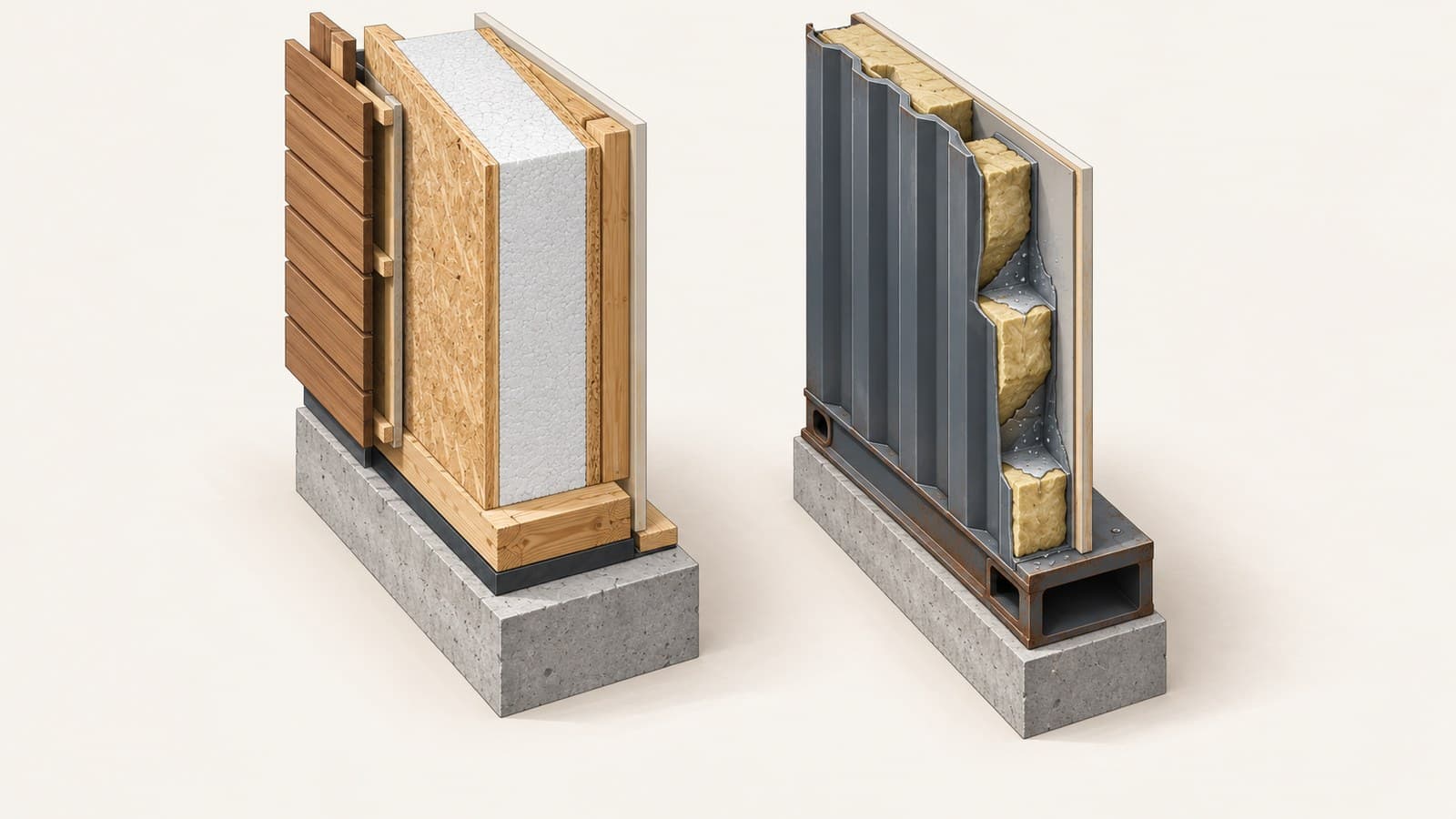
SIP house or container home: what actually decides it
We check for free whether your plot allows the build
Send us the locality and, if you have it, what the urban planning certificate says — we reply with what can be built there and which documents are missing, no strings attached.