 Homebly
How long does a SIP panel house last
The design life starts at 50 years, but the figure is set by water rather than by the material. What actually ends a SIP house, the six places damp gets in, what ages and what does not, and how a warranty differs from a service life.
Published: September 12, 2026Updated: October 12, 20265 min read
A SIP panel house is designed for a service life of 50 years and up. The figure comes with a condition, though, and it is worth saying plainly why: it describes the design, not an observed history. Masonry has hundred-year-old buildings you can go and look at; SIP as a technology is much younger and cannot show you the same thing.
What can be said with confidence is what the figure depends on. Not frost, not heat, not the material itself: water. Below is what ends a SIP house, where the damp gets in, what is decided in the factory and what on site, and how a warranty differs from a service life.
What "from 50 years" means
It is the design life: the span the structure is calculated for and the materials are chosen for, provided they work in the conditions assumed. It is not a promise that the house falls down in year 51, and it is not a ceiling either. It is the benchmark you design to, exactly as with any other building.
The second thing to know is that service life is not a property of the panel. The panel is made the same way for every house we build; the houses will last differently, depending on how they were assembled, closed and maintained. Which is why the fair comparison is between finished buildings rather than between materials, as set out in the comparison with brick.
What actually ends a SIP house
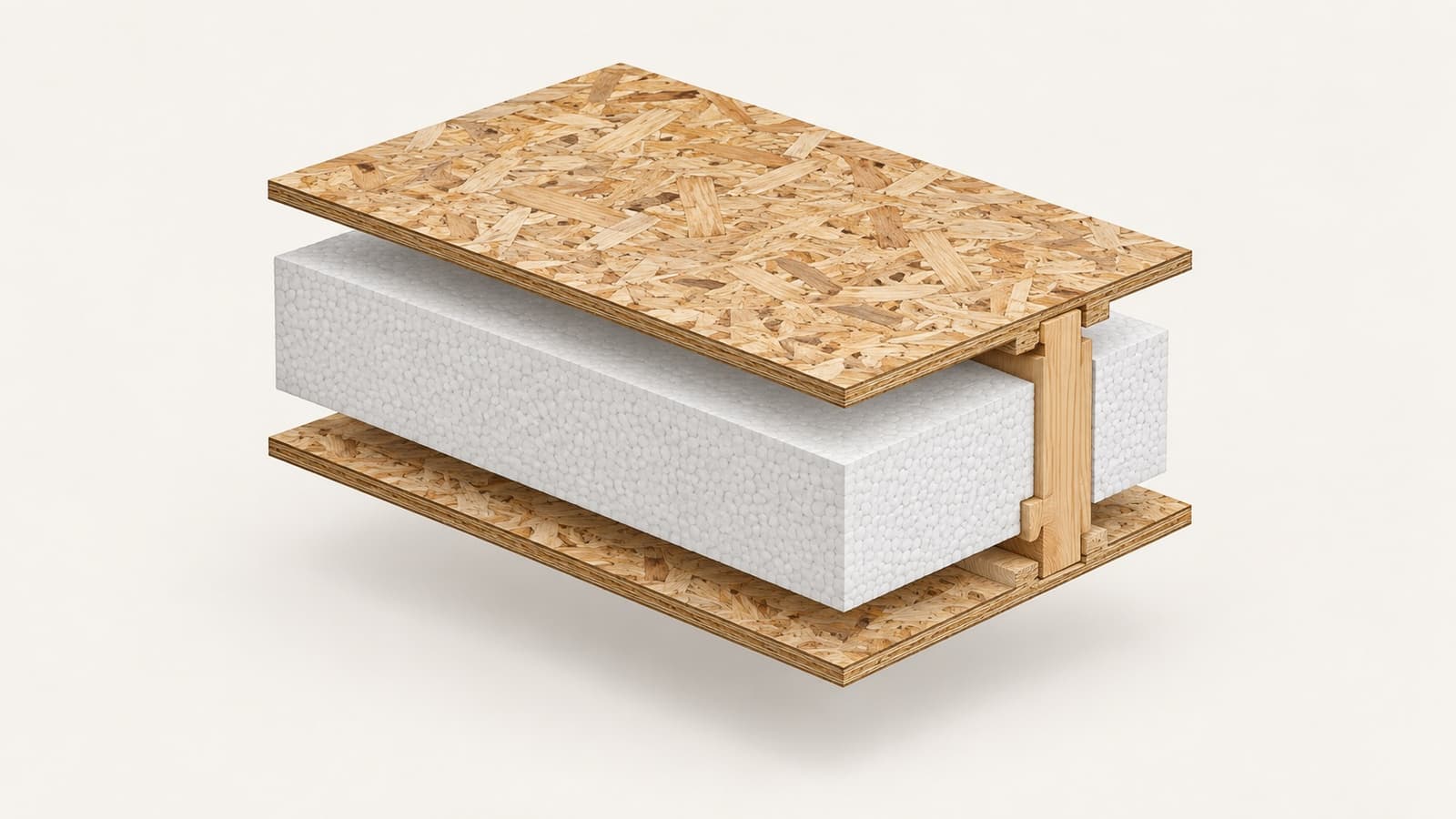
The insulating core does not rot and nothing eats it. The problem is the other component: the faces of the panel are timber-based boards, and wet timber kept wet for months loses its strength. This is not about one rainfall or about the moisture from cooking, but about water that reaches the inside of the wall and has nowhere to dry out.
From that comes the rule the whole subject rests on: a SIP house lasts as long as the timber-based elements of the panel stay dry. Everything else, from finishes to installations, gets replaced and repaired. A wall left damp for years does not get repaired cheaply.
The six places water gets in
| Place | What the problem looks like | What prevents it |
|---|---|---|
| Roof connections | Leaks at the ridge, at the eaves, around the flue | Design details followed, continuous waterproofing |
| The facade | Water driven straight into the cladding, no ventilated gap | A finish with a ventilation gap and proper drainage |
| Panel joints | Air and damp passing through the joint | Sealed at assembly, tapes and foams applied by the book |
| Window fitting | Condensation and stains around the frame | Vapour-tight on the inside, rain-tight but vapour-open on the outside |
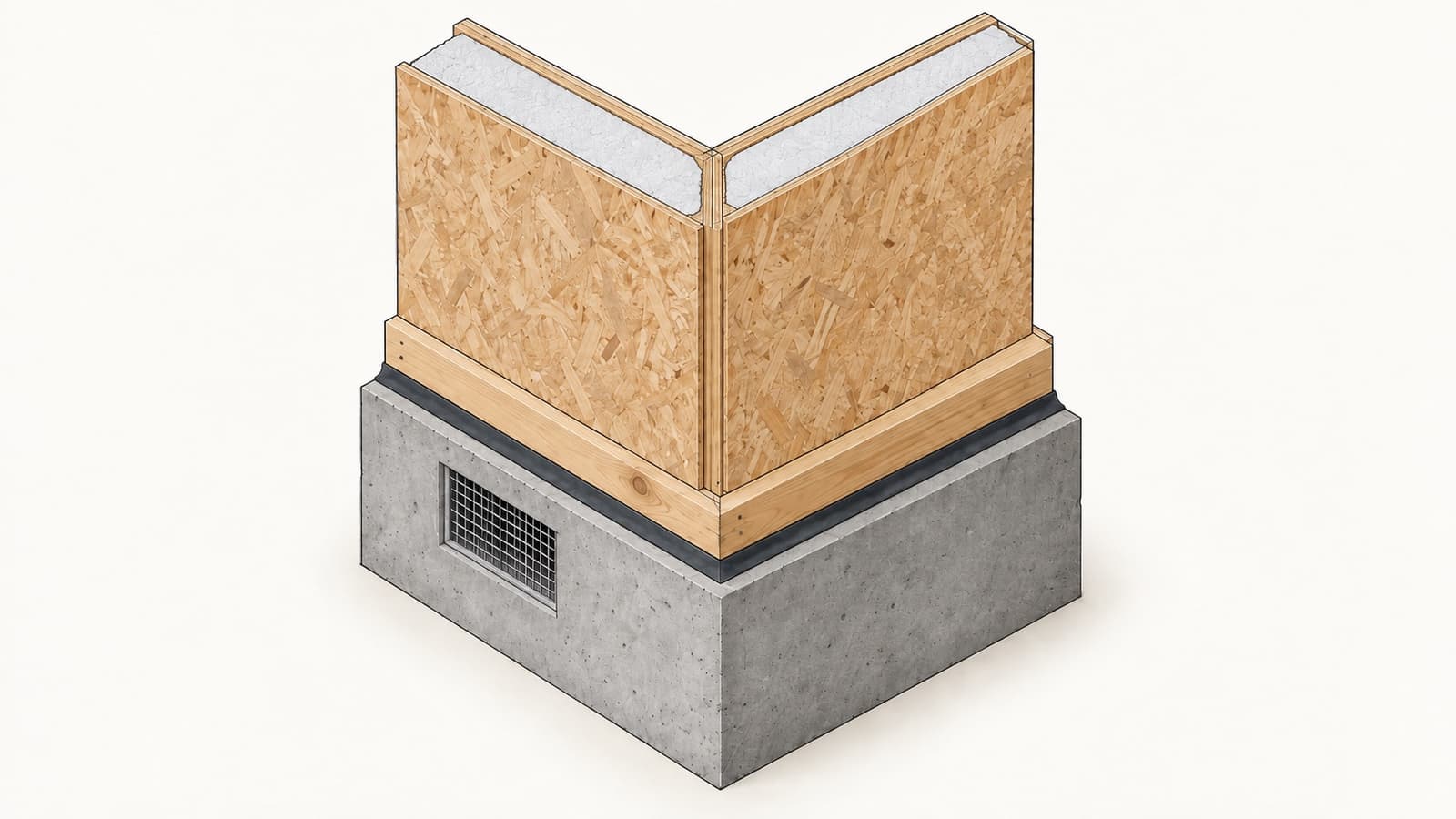
| The plinth | Water drawn out of the foundation into the wall | Waterproofing between the foundation and the first panel |
| Service penetrations | Holes left open after the work is done | Every penetration resealed once the work is finished |
The list is short and the same for any panel house. If you check only six things at handover, check these.
Five of the six are decided on site rather than in the factory. That is also why in Romania we insist our own teams do the assembly: a good panel does not save a house where a bad detail lets water in for years. What is worth asking a manufacturer before you sign is set out separately in the 12 questions.
Catalogue: 19 projects with prices (PDF)
All barnhouse and A-frame projects with shell and turnkey prices — free, straight to your inbox.
We’ll reply on WhatsApp at this number. By submitting this form, you agree to our privacy policy.
What ages and what does not
In normal conditions the insulating core and the geometry of the panel do not age: the wall does not settle or shrink the way solid timber does, so the settlement cracks specific to other technologies do not appear. The structure stays the one calculated in the design.
What does age, as in any house, is everything at the surface: the facade finish, the window seals, the roof waterproofing, the silicone in the bathrooms. Those are renewed at ordinary intervals and have nothing to do with the wall technology. Confusing the two categories is what produces both the exaggerated promises and the exaggerated fears.
A warranty and a service life are different things
A warranty is a contractual obligation for a written term. Ours is 10 years on the structural integrity of the building, and it comes from whoever assembles the house: in Romania our own teams do, so the warranty is ours. Where a local contractor assembles, even under our engineer’s supervision, the warranty is the contractor’s, and for a house kit you assemble yourself we give no assembly warranty. Separately, the kit’s SIP panels carry a 10-year factory warranty that they will not delaminate, whoever assembles them. A service life is a technical estimate for the whole building, normally maintained: a 10-year warranty does not mean a 10-year life, and a design life of 50 years does not mean 50 years of warranty. A manufacturer who blurs the two, or who offers a warranty with no subject and no term, is telling you something about themselves.
It is worth reading what nobody's warranty covers either: the effects of damp let in by work somebody else did, unconsulted structural changes, and missing ventilation. On that last point we wrote bluntly in the list of SIP downsides.
What is on you after you move in
The rules are few and dull, which is a good sign. Do not cut or move load-bearing panels without a calculation; any new opening is made to a detail. Reseal every service penetration you make later. Install a fireplace, a stove or a flue only after the detail has been discussed with us. And use the ventilation: a system switched off to save money brings back exactly the problem it prevents.
The rest is the ordinary maintenance of any house: the roof checked, the gutters clear, the facade in good condition, and water taken away from the plinth.
Against a brick house
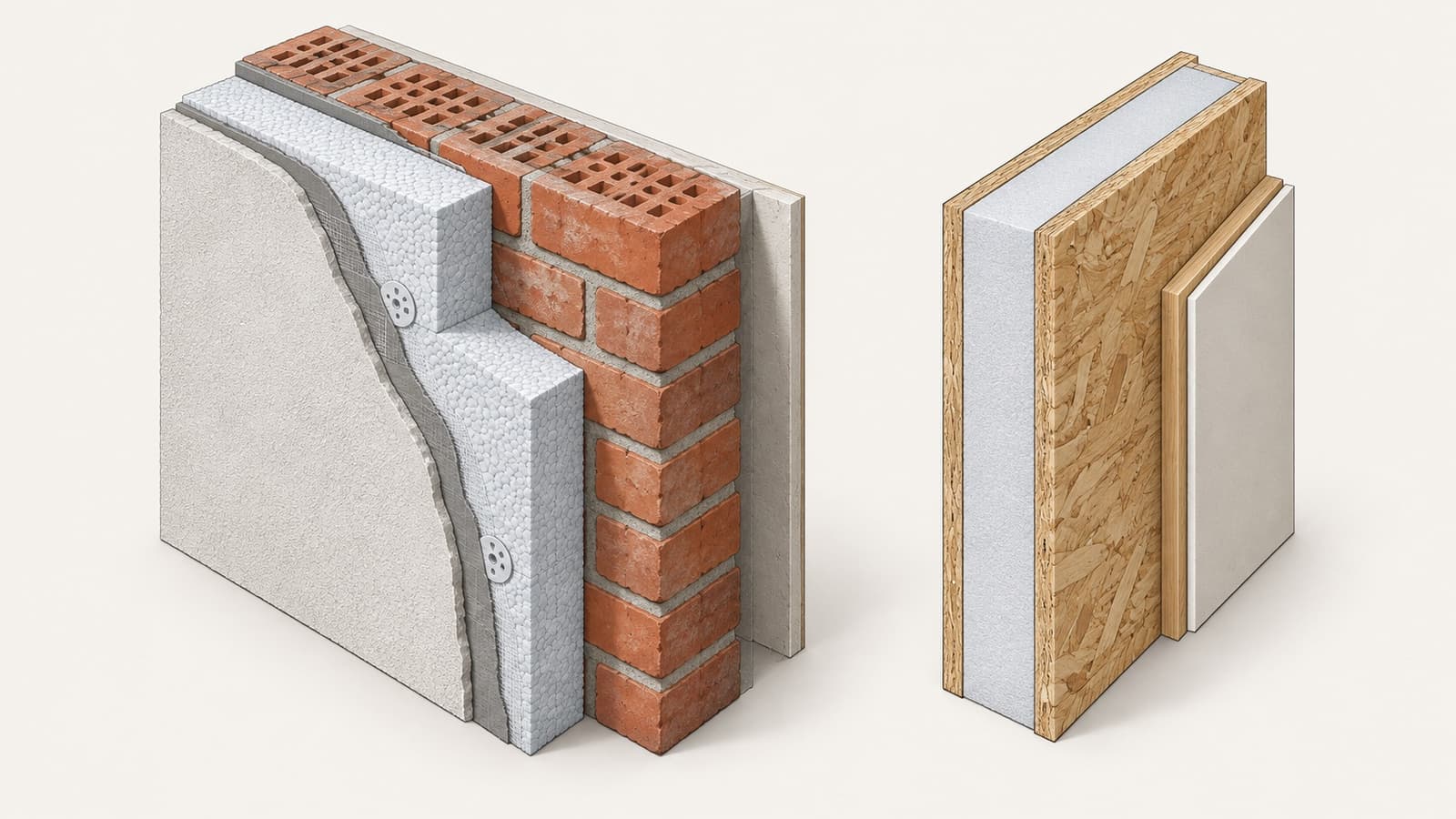
Honestly: masonry has the advantage of history. There are masonry buildings generations old, and that counts for a buyer's confidence and sometimes for a valuer. A SIP house designed and assembled correctly is built for decades of use, but it cannot yet show you a century of practice.
The weak point is different rather than larger, though. Masonry damp at the plinth, or with badly resolved thermal bridges, ages too; it simply forgives more of the time lost before the repair. With SIP the price of carelessness falls due earlier. The detail of the comparison is in SIP versus brick, and the panel and the assembly are described on the technology page.
How long does a SIP panel house last?
The design life starts at 50 years. That is the benchmark the structure is calculated to and the materials are chosen for, on the condition of correct assembly and working ventilation. It is not an automatic guarantee and it is not a ceiling either.
What shortens the service life most?
Water that reaches the inside of the wall and stays there. The insulating core does not rot, but the faces of the panel are timber-based boards, and timber kept wet for months loses its strength. Hence the weight on connections, seals and plinth waterproofing.
Does a SIP house settle or crack over time?
Not in normal conditions. A panel wall does not settle the way solid timber does, and the settlement cracks specific to other technologies do not appear. What is renewed over time are the finishes, the seals and the roof waterproofing, as in any house.
What warranty do I get?
A written 10-year warranty on the structural integrity of the building, from whoever assembles it: from us when our teams build in Romania, from the local contractor when they assemble the house. A warranty and a service life are different things: the first is a contractual obligation, the second a technical estimate for a normally maintained building.
What do I have to do for it to last?
Do not touch load-bearing panels without a calculation, reseal any service penetration made later, install flues and heat sources to a detail, and use the ventilation. Beyond that it is ordinary maintenance: roof checked, gutters clear, water taken away from the plinth.
What we do before you sign
If you already have land, send us the locality and, if you have it, the urban planning certificate: we pick the design, settle the foundation after the geotechnical survey, with the price gap set out in the guide to foundation costs, and you get a fixed price for the whole job. And if you want to see what the structure you are buying contains, the point-by-point list is in what the house kit includes.
Want a fixed price for your project?
Fill in the form and get a personalized estimate based on your land, project, and options.